The Holidays are here! Most of us will be travelling to see family and friends over the holidays.
In this issue of our newsletter we wanted to share some helpful tips that will make travelling over the holidays stress free.
The following topics are covered in this issue:
Pilates at the clinic
Holiday breakfast recipe
Gardening with care
Chiropractic and Massage Therapy and for some fun we have included a Word Search Puzzle.
When we think about it, we do sit a lot. From watching TV, driving to work, to using the computer in the workplace and then using our computer at home – we sit for a very long time each day. It is estimated we sit for around 10-15 hours per day.
So, just how bad is all this sitting? It has often been termed that ‘Sitting is the new smoking’. Dr James Levine from the Mayo clinic in the USA suggests that there are over 34 chronic diseases that are associated with excess sitting. These include type 2 diabetes, heart disease and even cancer.
What happens to our body during prolonged sitting? Our metabolism slows due to our cells not needing as much energy, our blood sugar levels and blood pressure both increase. When we are not moving, our muscles are not contracting. When muscles contract, it forces the sugar in our blood to be forced into the muscles to provide a fuel source for contraction. This is the reason type II diabetes occurs – our muscles are not using up the sugar in our blood stream.
How to minimise our seating:
Keep moving at work:
Get up and move for 10 minutes of every hour
Stretch your back and legs often
Walk over to your colleagues instead of emailing or calling
Use the stairs
Use a standing desk
Conduct walking meetings
Reduce the number of hours we watch TV, use tablets/laptops!
Making frequent posture changes is very important. Prolonged sitting does encourage more rounded shoulders, an increase in thoracic kyphosis (ie, hunchback) and a forward head carriage posture (head positioned in front of the shoulders). Breaks as short as 1 minute can even help with posture, you just need to change your static position!
A quick postural exercise:
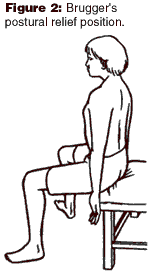
Brugger’s postural exercise – Start by sitting on the edge of your chair with your arms hanging by your side, palms facing forward. Now rolls your thumbs out and back. As you do this, try and get your shoulder blades to touch each other in the middle of your spine. Add in a chin tuck, by tucking the chin straight back.
Hold this position for roughly 10 seconds and perform 2-3 times. You can perform this exercise as many times as you want throughout the day. Also don’t forget to include this into your routine of getting up out of the chair and moving!
At Mona Vale Chiropractic Centre, we treat more than just the spine. We see and treat daily things like ankles, knees, hips, shoulder and muscle/ligament injuries.
Hamstring strains are a very common injury we see in the clinic. There are many mechanisms as to how they occur, the most common being running, jumping and sports such as rugby, tennis and soccer.
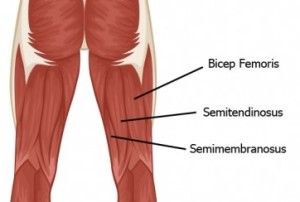
The hamstring consists of three muscles located at the back of the thigh. Its function is to extend the hip and to bend the knee.
The 3 muscles of the hamstring
Muscle overload is the main cause of a strain. This happens when the muscle is stretched beyond its capacity. There are several risk factors for hamstring strains:
• Previous hamstring strain
• Muscle imbalance (Quadriceps / hamstring ratio)
• Poor conditioning
• Muscle fatigue
Management and treatment of hamstring strains varies depending on the type of strain. A type 1 strain can take 1-4 weeks to heal, while a grade 3 tear (complete tear of the muscle) can take up to 6 months to heal.
Symptoms include a sharp & intense pain at the back of the thigh, some initial swelling, possible bruising/discolouration, weakness (especially with stairs/running) and stiffness.
Initial management should follow the RICE protocol – Rest, Ice, Compression and elevation. Following, chiropractic treatment can commence which will involve stretching and strengthening of the hamstring and surrounding muscles. Specific chiropractic adjustments are also used on the lower back and pelvis. Adjustments to this area can improve the biomechanics of running/walking and also ensure that correct muscle recruitment occurs. A rehabilitation program based on best available evidence will also be provided to ensure optimum strength and flexibility is obtained allowing for a return to play.
At Mona Vale Chiropractic Centre, we use a variety of treatment options – Adjustments, myofascial release, acupuncture / dry needling, instrument assisted soft tissue mobilisation (IASTM), ultrasound, kinesiotaping and Scenar.
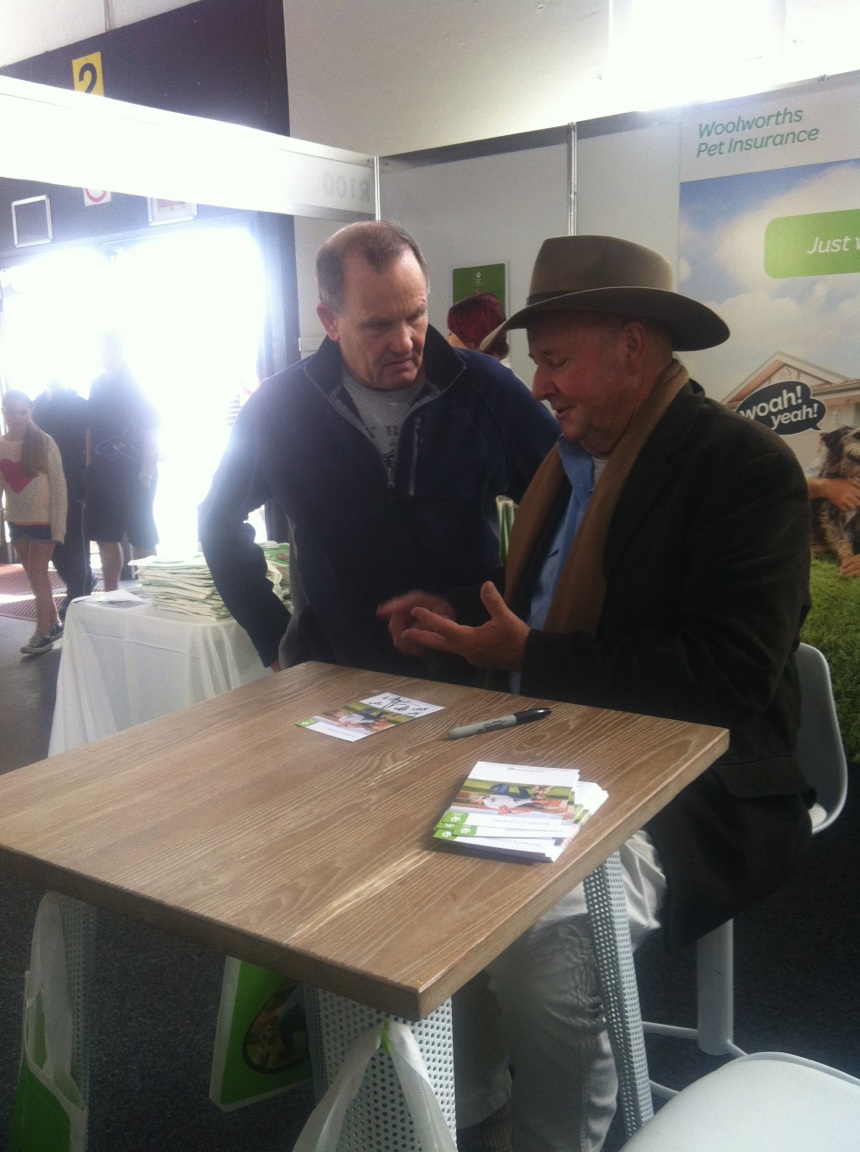
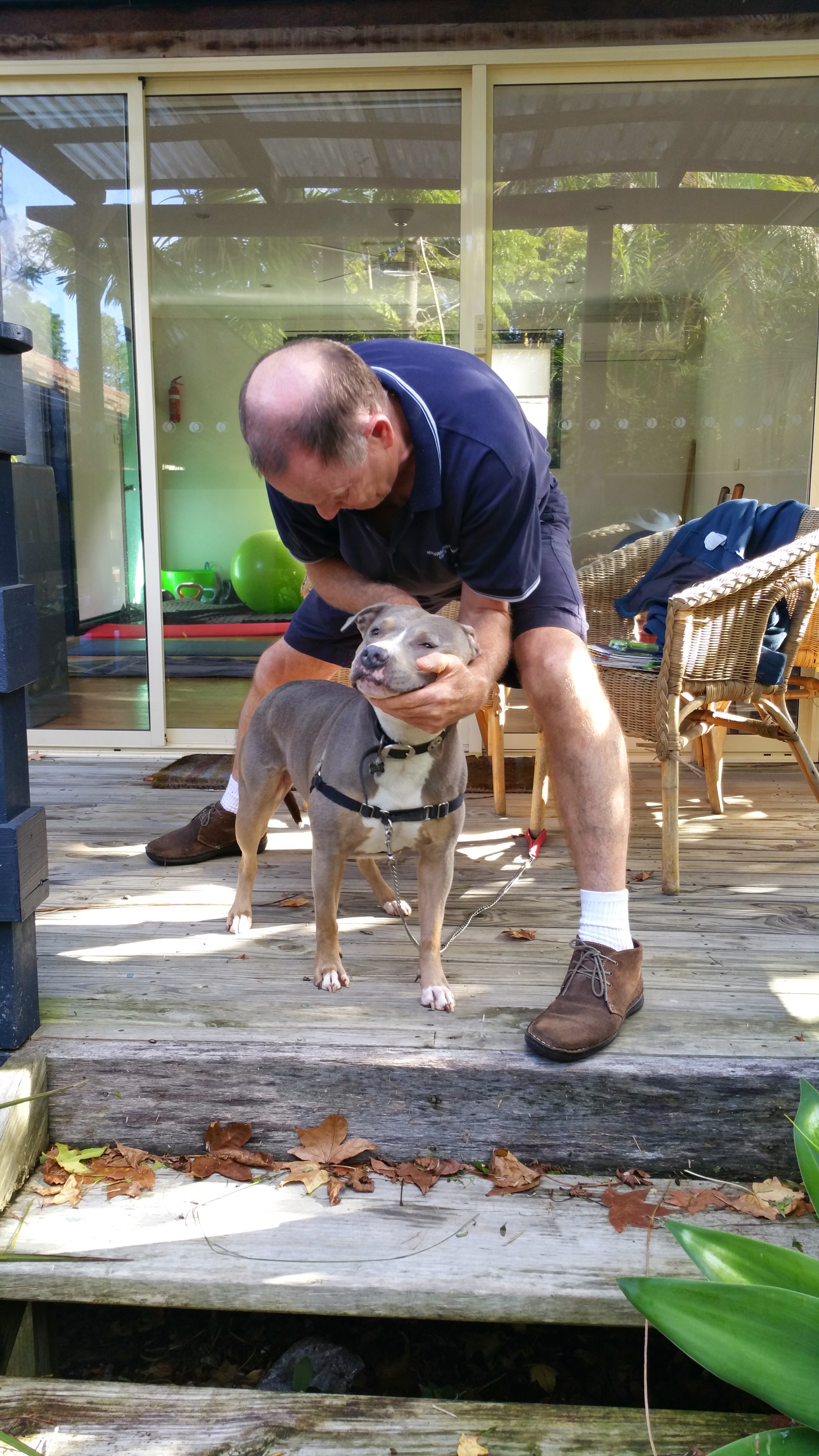
On a recent visit to the Sydney Dog Show, Neil caught up with Dr Harry Cooper – TV veterinarian and fellow animal chiropractor. Dr Harry talked about the fantastic improvement chiropractic care can give dogs and how it can improve their quality of life. It can allow them to become more active, helping them when they first get up in the morning with stiffness or even before/after exercise. (Just like me!)
Neil deep in discussion with Dr Harry
Both Harry and Neil agreed as to how rewarding adjusting dogs is and how quickly you can see the results!
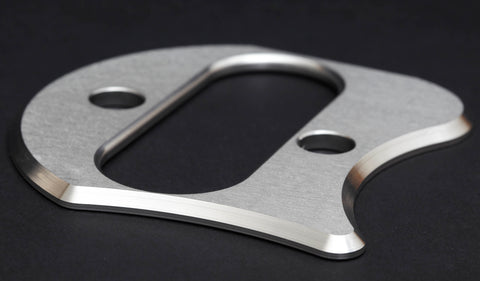
Instrument assisted soft tissue mobilisation is another form of treatment we use at Mona Vale Chiropractic Centre. It is a treatment involving using a stainless steel tool, such as the Edge Mobility Tool:
The tool allows for the diagnosis and treatment of soft tissue injuries (Muscle, ligament, tendons and fascia). The tool effectively breaks down scar tissue and adhesion’s within the soft tissues. The tool causes a micro-trauma to the tissues, resulting in a local inflammatory response. This in turn results in an increased vascular response leading to a remodeling of the collagen fibre matrix and a reduction in scar tissue.
Studies have shown an increase in range of motion, strength and a decrease in pain following IASTM treatment. (Melham, 1997)
IASTM is very effective for:
Neck and back pain
Plantar fasciitis
Tennis elbow (lateral epicondylalgia)
Shoulder pain / Rotator cuff injuries
Knee pain
Ankle Pain
Shin splints
References: Melham, TJ, Sevier, TL, Malnofski,fckLRMJ, Wilson, JK, and Helfst, RH, Chronic ankle pain and fibrosis successfully treated with a new non-invasive augmented soft tissue mobilization (ASTM): A case report.fckLRMed Sci Sports Exerc.fckLR1997;fckLR30:801-804
In this December issue of our newsletter, we share some Chiropractic tips for Christmas
Gift Vouchers
Chiropractic Tips to survive Christmas Opening Hours over Christmas Exercise Classes over Christmas
Chiropractic Care for Kids
Healthy Christmas Cake
… are some of the topics covered in this issue.
As well as our usual segment on what is happening at our clinic, and more tips on maintaining a healthy lifestyle.
Christmas is a wonderful time of year where we can see the family, take some time off and enjoy the summer. I’m not the only one who thinks that the most wonderful thing about an Aussie Christmas is a swim on Christmas Day.
As we all know, Christmas can take a toll on our bodies, affecting our spine and nervous system. Christmas is a mixed experience of over indulging in Christmas cheer as well as lugging heavy presents around – not to mention the stress of getting everything ready for the big day. Not suprising that Christmas is a stressful period on the body in many ways. Here are a few Christmas survival tips;
If you are planning on doing lots of physical things during the holidays like renovations or taming the garden, take it easy. Listen to your body for warning signs that indicate subluxations such as strains, reduced range of motion, stiffness pain and soreness.
Remember your posture and good lifting techniques while working around the house, garden and garage (bend your knees not your spine & be careful of any combined bending/twisting action).
Anxiety, stress and depression are very common during the festive season. Take time out for you and your family and enjoy. Whether this be a holiday, hobby or just potting around. This is all good for your health and wellbeing.
Get enough sleep. Plan for some mid-day naps or early nights to help you cope with the “silly season”
Watch the alcohol intake and don’t overdo it. Alcohol will dehydrate you and is a depressant which will have negative effects of tiredness. The same thing applies to too much food. Have a salad or just fruit for a few meals each week.
Keep moving, plan for some walks, swimming and gentle exercise. If you are looking forward to the annual game of golf, tennis of a surf, remember start slowly. If you haven’t done that activity for a while take it easy and don’t over do it.
Keep your spine adjusted and subluxation free. Have a Chiropractic treatment or enjoy a massage to make sure that you are well prepared for the Christmas season.
Have a wonderful Christmas and a joyful New Year From all of us at Mona Vale Chiropractic Centre
Chiropractic treatments often involve alot more than you may initially expect. I have found that a new technique from the USA called voodoo floss banding gives great results.
Voodoo Floss Banding involves using a compression band wrapped around joints and muscles to improve range of motion and decrease swelling. It is very effective for ankles, knees, wrists, elbows, shoulders and strained muscles that have reduced motion, stiffness and pain. The compression and movement creates a shearing effect which restores sliding-surface function to the underlying tissues. Once the band is released, blood flows into poorly saturated joints and tissues.
It is also great for acute injuries where swelling is involved. Swelling can put a lot of pressure on nerve endings, reduce the joints range of motion and cause acute pain. The compression pushes the swelling into the lymphatic system where it can be drained. A lot of relief is felt immediately after. Mitchell Roberts – Chiropractor